VIA 品格優勢
VIA classification of character strengths
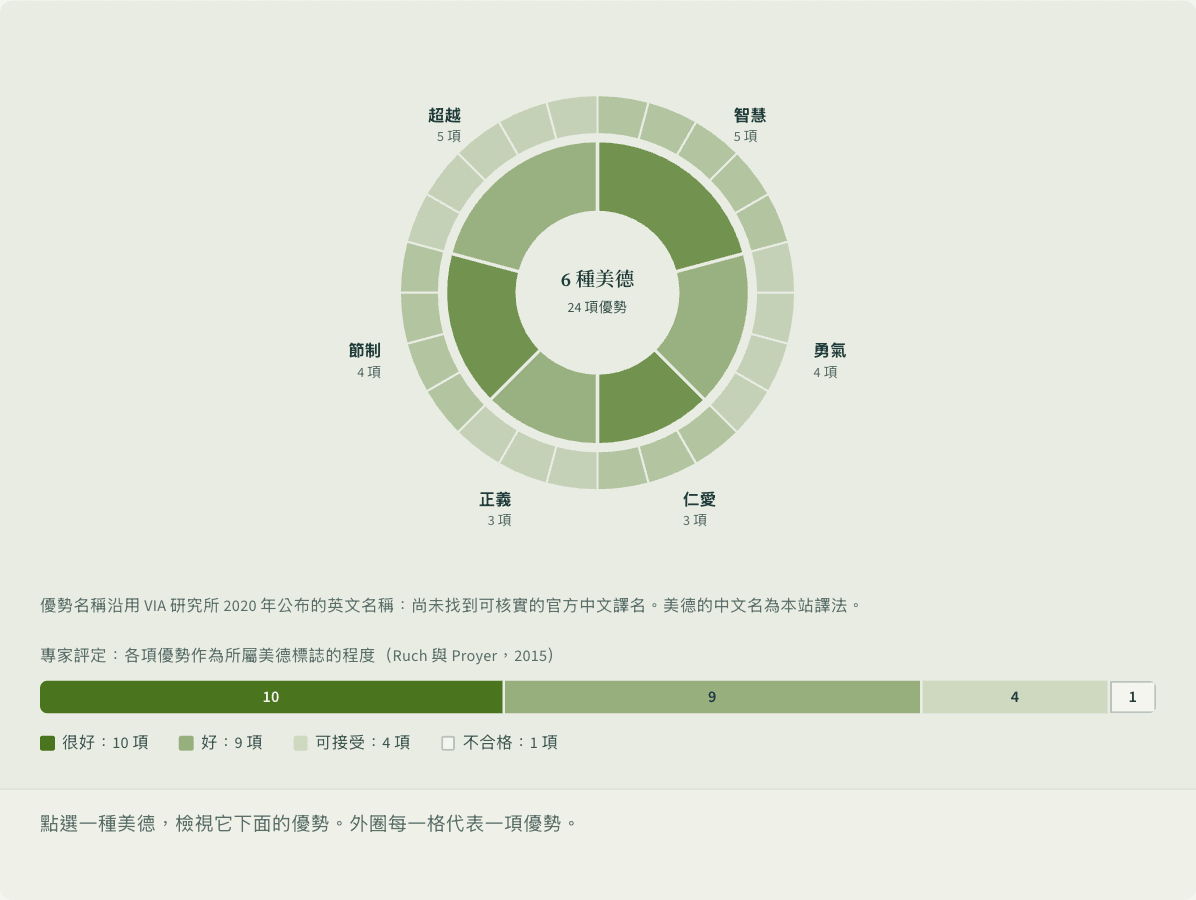
VIA 品格優勢分類由 Christopher Peterson 與塞利格曼於 2004 年提出,把 24 項品格優勢歸入智慧、勇氣、仁愛、正義、節制、超越 6 種美德[1][2]。
優勢名稱沿用 VIA 研究所 2020 年公布的英文名稱:尚未找到可核實的官方中文譯名。美德的中文名為本站譯法。
專家評定:各項優勢作為所屬美德標誌的程度(Ruch 與 Proyer,2015)
很好:10 項 好:9 項 可接受:4 項 不合格:1 項
一個雙層圓環。內圈分成 6 段美德:智慧(5 項優勢:Creativity、Curiosity、Judgment、Love of Learning、Perspective),勇氣(4 項:Bravery、Perseverance、Honesty、Zest),仁愛(3 項:Love、Kindness、Social Intelligence),正義(3 項:Teamwork、Fairness、Leadership),節制(4 項:Forgiveness、Humility、Prudence、Self-Regulation),超越(5 項:Appreciation of Beauty & Excellence、Gratitude、Hope、Humor、Spirituality)。外圈 24 格,每格一項優勢。下方註明優勢名稱保留英文,因為沒有找到可核實的官方中文譯名。最下方的長條圖顯示專家評定結果:10 項很好,9 項好,4 項可接受,1 項不合格。
 儲存為圖片(PNG)
要點
舉個例子
小林做完 VIA 問卷,排在前面的是好奇心、好學和幽默。她原本不覺得這些算本事,後來帶新人時有意用上:用提問代替說教,用玩笑緩和緊張氣氛。
常見誤解與侷限
常見誤讀是把 VIA 結果當作「天賦測驗」,或把排名靠後的優勢當成缺點。結果描述的是相對強弱的輪廓,每項優勢人人都有[3];6 種美德的劃分本身也仍有爭議,不宜當成固定的類型[4]。
參考來源
- 1 Peterson, C., & Seligman, M. E. P. (2004). Character strengths and virtues: A handbook and classification. Oxford University Press; American Psychological Association. 檢視來源
- 2 VIA Institute on Character (2020). The VIA classification of 24 character strengths. VIA Institute on Character. 檢視來源
- 3 VIA Institute on Character (n.d.). Character strengths. VIA Institute on Character. 檢視來源
- 4 Ruch, W., & Proyer, R. T. (2015). Mapping strengths into virtues: The relation of the 24 VIA-strengths to six ubiquitous virtues. Frontiers in Psychology, 6, Article 460. doi:10.3389/fpsyg.2015.00460
最近一次對照來源核對:2026年10月26日